
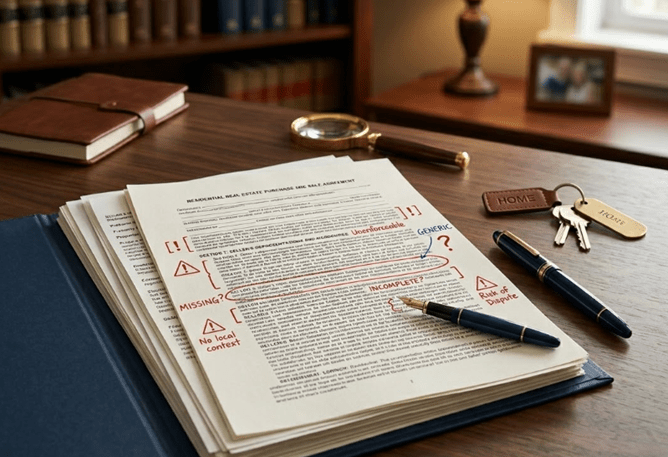
Using generic real estate contract templates may seem like a convenient and cost-effective solution for buyers, sellers, and real estate professionals. These templates are widely available online and often promise a ready-made solution for property transactions. However, relying on a one-size-fits-all document can expose parties to significant legal risks. Every real estate transaction is unique, and failing to account for specific circumstances can lead to disputes, financial loss, or even legal liability.
Common Legal Risks Associated with Generic Templates
Missing or Ambiguous Terms
Generic contracts may omit critical terms relevant to your transaction, such as contingencies, inspection clauses, or financing conditions. Ambiguous language can lead to misinterpretation, leaving parties vulnerable to lawsuits or contract breaches. Without proper customization, important protections may be overlooked, potentially causing costly disputes.
Non-Compliance with Local Laws
Real estate laws vary by jurisdiction, and what is valid in one area may be invalid in another. Generic templates often fail to reflect state or local regulations, creating the risk of unenforceable provisions. For instance, requirements for disclosures, property conditions, or zoning compliance might be overlooked, exposing parties to legal consequences.
Limited Protection in Disputes
Standard templates rarely anticipate complex scenarios, such as boundary disputes, title issues, or financing complications. In the event of a dispute, a generic contract may not provide adequate legal protection. Parties may find themselves without clear remedies, increasing vulnerability in litigation or arbitration proceedings.
Best Practices for Safe Real Estate Transactions
Seek Legal Guidance
Consulting an experienced real estate attorney ensures that contracts are tailored to the specific transaction and compliant with applicable laws. Legal review can help identify gaps or ambiguous terms and provide necessary protections for both buyers and sellers.
Customize for Your Transaction
Every real estate deal has unique factors, including financing, inspections, and contingencies. Tailoring contracts to reflect these specifics helps prevent misunderstandings and ensures that parties’ rights and obligations are clearly defined.
Prioritize Transparency and Clarity
Clear, detailed contracts minimize the risk of disputes. Including explicit terms for timelines, responsibilities, and contingencies reduces ambiguity and enhances enforceability, protecting all parties involved.
Conclusion
While generic real estate contract templates may appear convenient, they carry significant legal risks. Missing clauses, unclear language, and lack of compliance with local laws can create costly problems for buyers, sellers, and agents alike. By consulting legal professionals and customizing contracts for each transaction, parties can safeguard their interests, reduce disputes, and ensure a smoother, legally sound property transaction. Proper attention to legal detail ultimately protects investments and provides peace of mind throughout the real estate process.
This post was written by a professional at Kearney Law. At Kearney Law, we’re dedicated to delivering personalized legal guidance that puts your needs first. Whether you’re looking for an attorney for personal injury near you, a Real Estate Attorney in Carrollwood, FL, a probate attorney near you, or a title attorney near you, our team is ready to provide the focused representation you deserve. We recognize that every client’s situation is different, which is why we take the time to understand your case and craft strategies that align with your goals. With a commitment to protecting your rights and securing the best possible outcome, Kearney Law offers trusted legal support with the attention and care you won’t find just anywhere.

